A game by Hardline Interactive
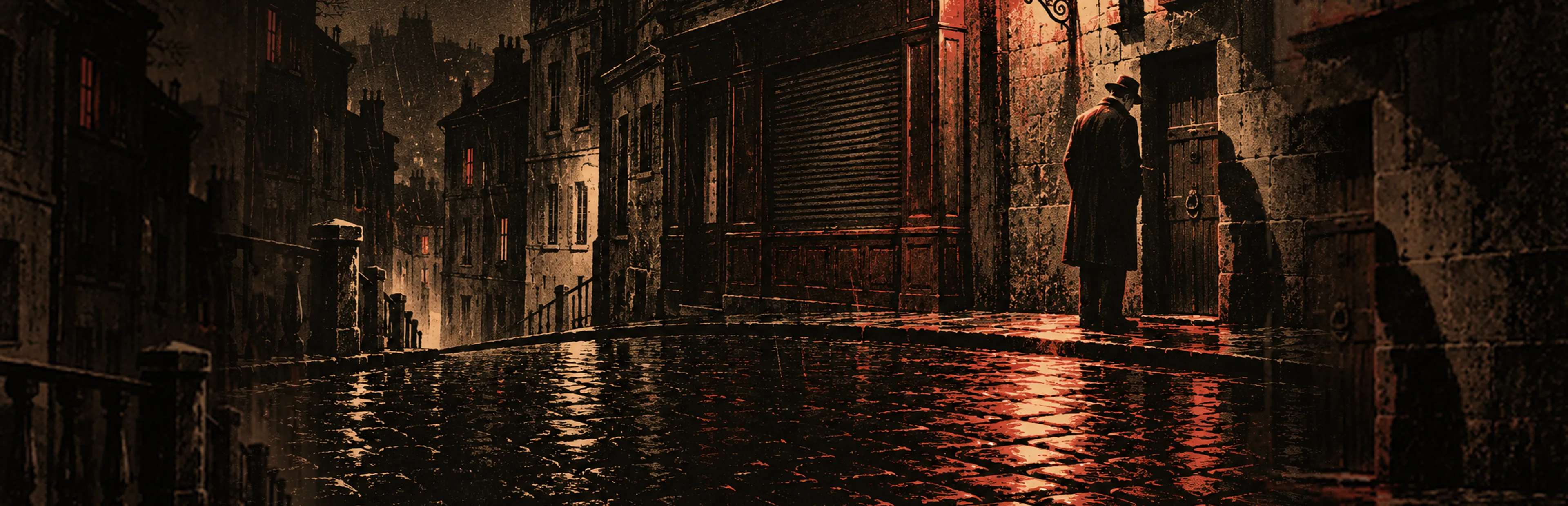
Lyon, 1943. You keep the back door of a Resistance cell beneath a family bakery, and decide who comes in.
- Developer
- Hardline Interactive
- Release
- Coming soon
- Platforms
- Single-player
- Steam Cloud
- Full controller support
- Steam Achievements
- Adjustable text size
- Custom volume controls
- Subtitle options
About the game
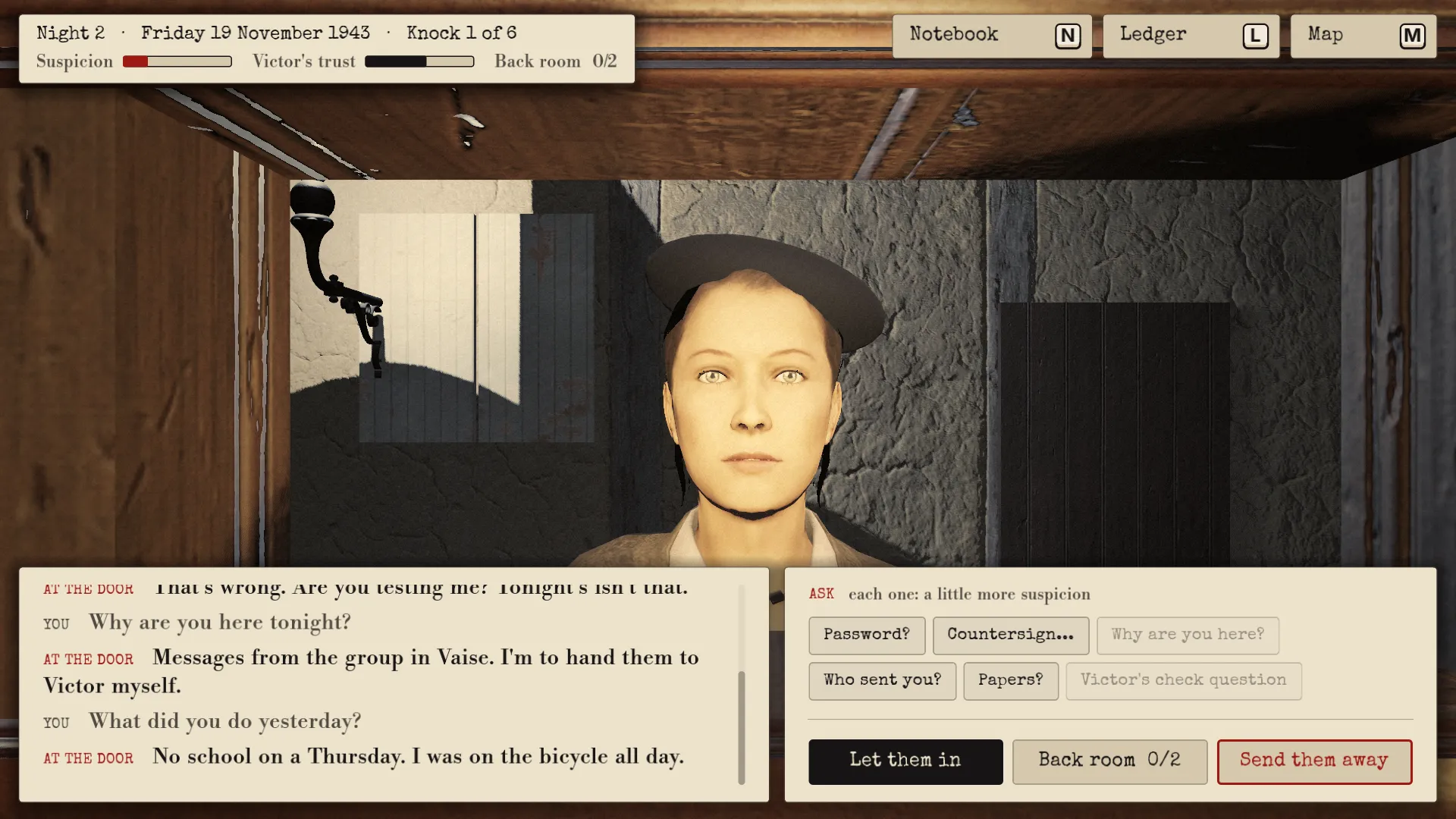
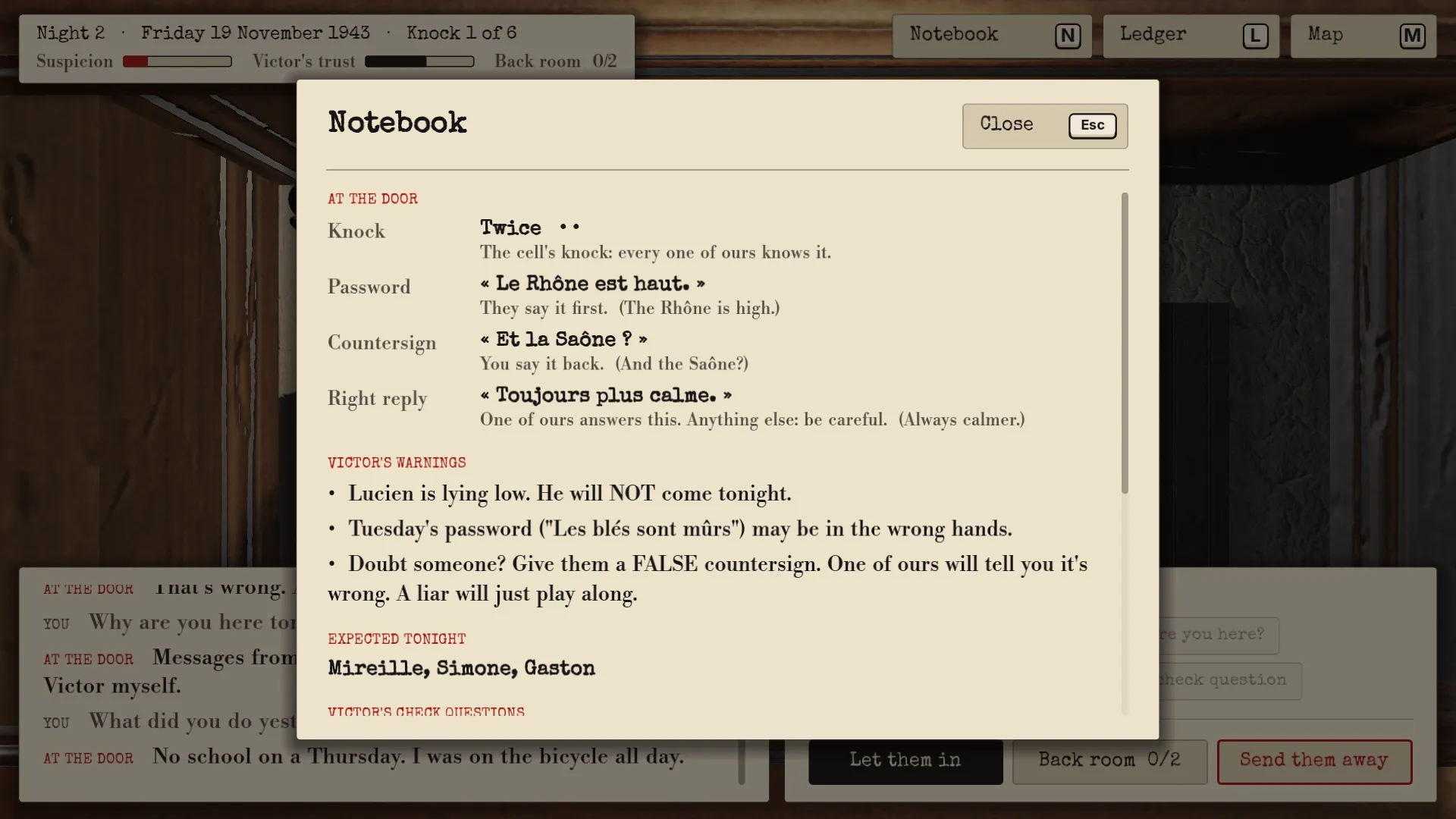
Lyon, November 1943. You keep the door of a Resistance cell hidden in the cellar beneath your family’s bakery on the Croix-Rousse. Each night, people knock. Through a slot in the door you ask for the password, give the countersign, listen to the knock, and ask what you need to know. Then you decide: let them in, keep them in the back room until morning, or send them away.
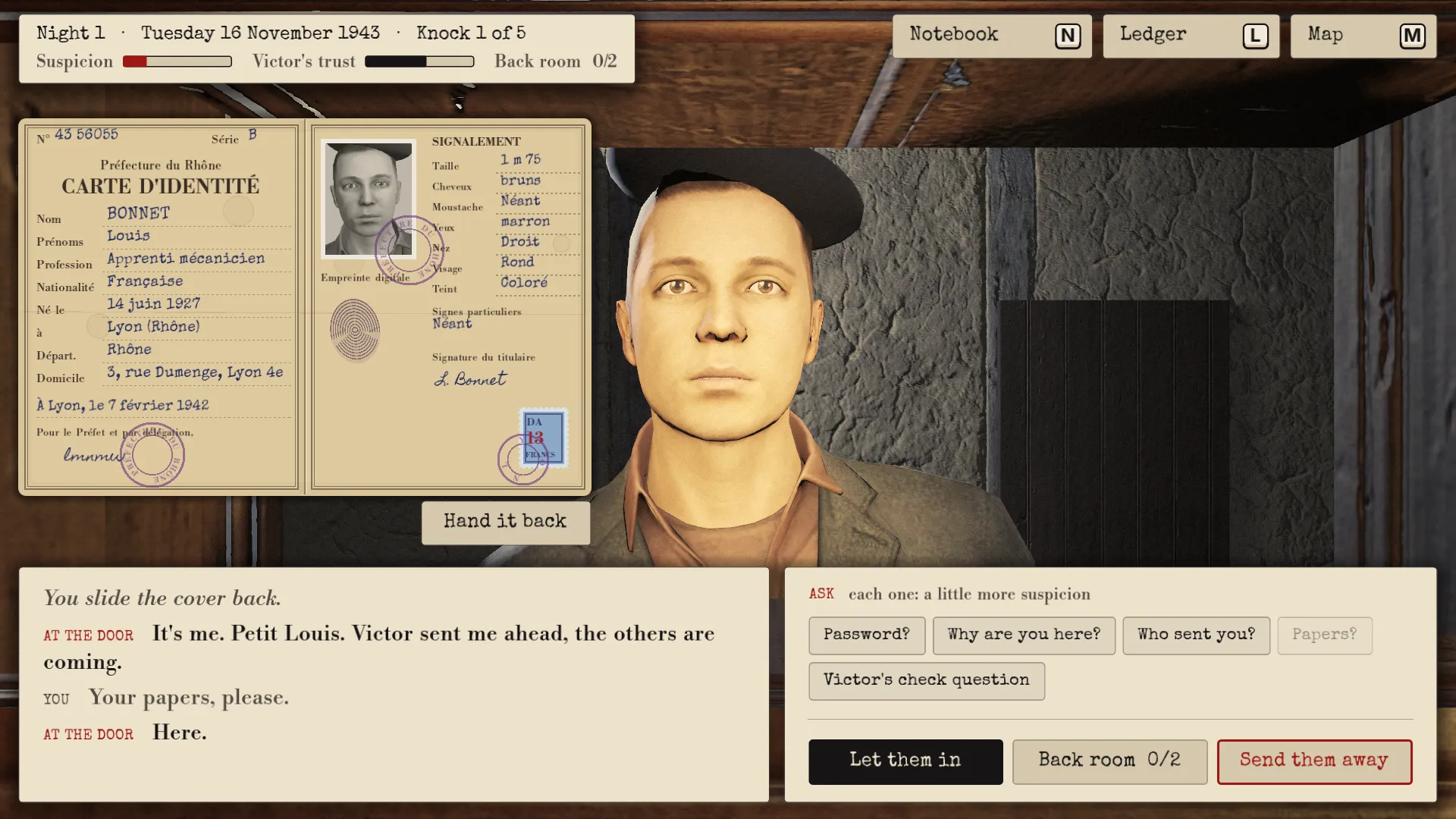
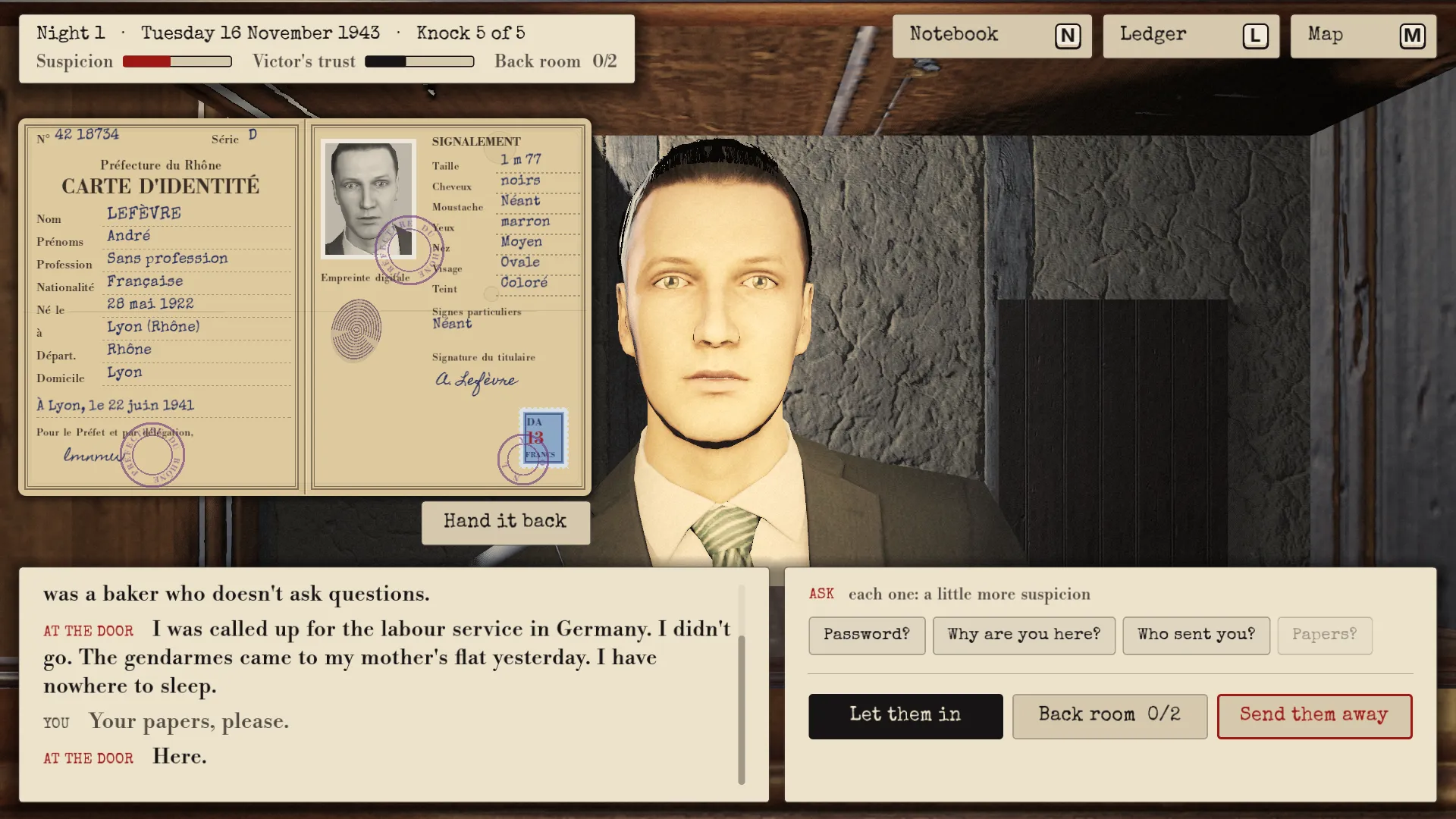
Members know tonight’s password and the reply to the countersign, knock the cell’s pattern, and look like their photo in the ledger. Informers and the Milice try to pass for them: yesterday’s password, a wrong date on an identity card, a face that isn’t the one in the ledger. Strangers have no password at all, and what they’re owed is for you to decide. Let the wrong person in and suspicion rises; turn away the right one and they may be arrested in the street.
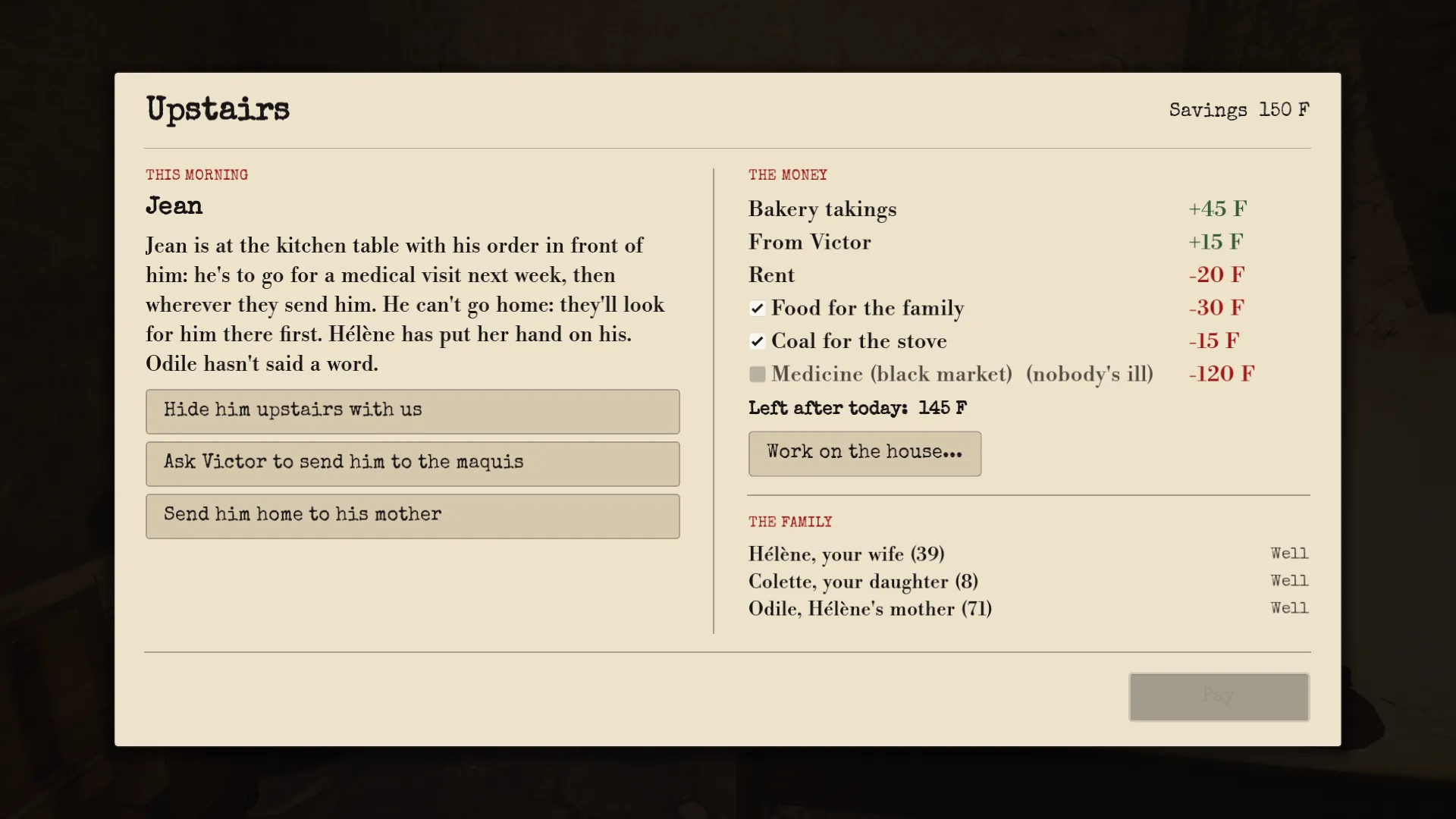
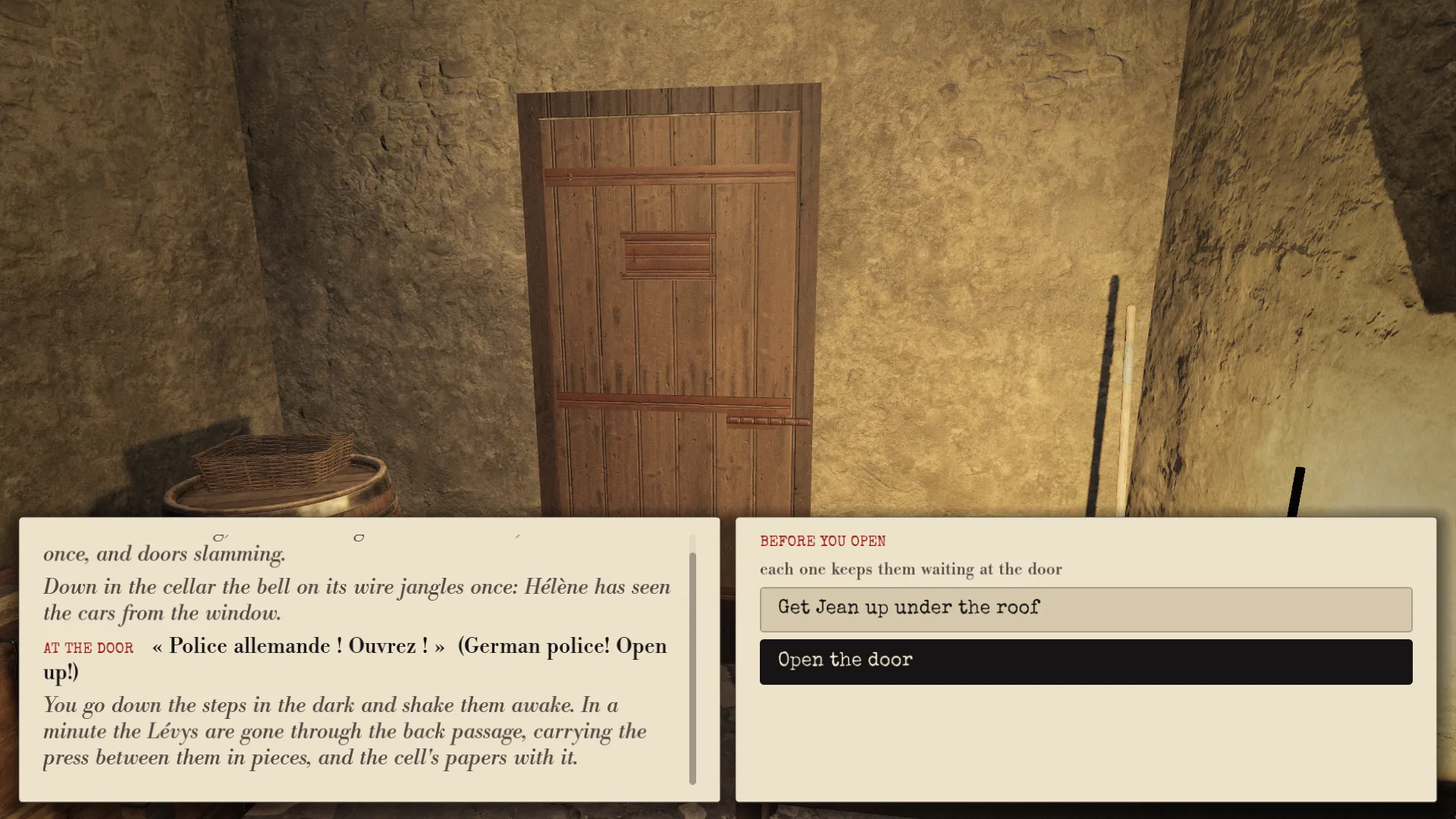
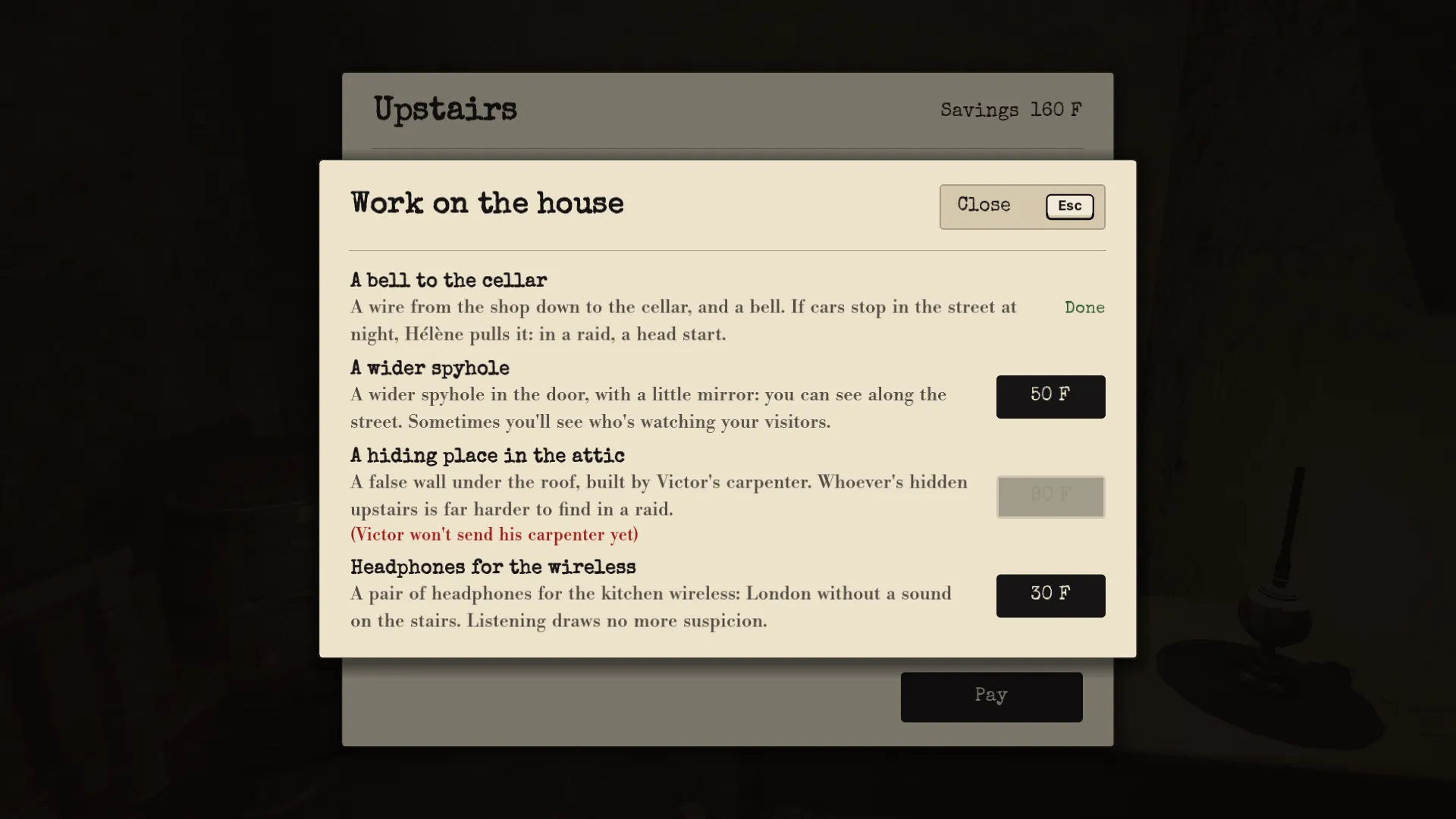
Each morning there are ration tickets to stretch, rent to pay, coal to find in a hard winter and medicine for whoever falls ill. Some mornings bring a choice that can’t be taken back. If suspicion grows too great, they come at dawn: you have a minute to empty the cellar and hide whoever is upstairs before you open.
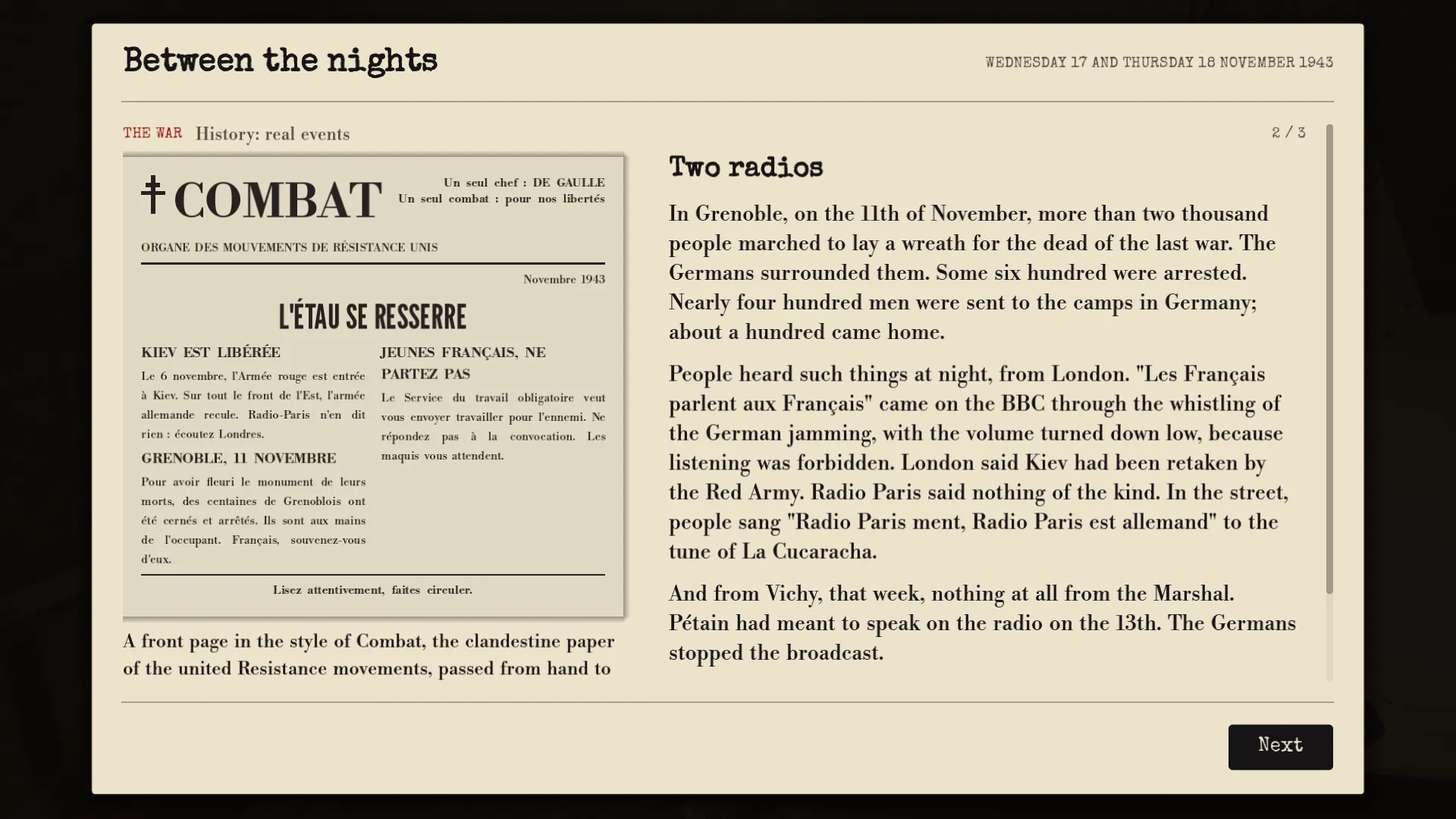
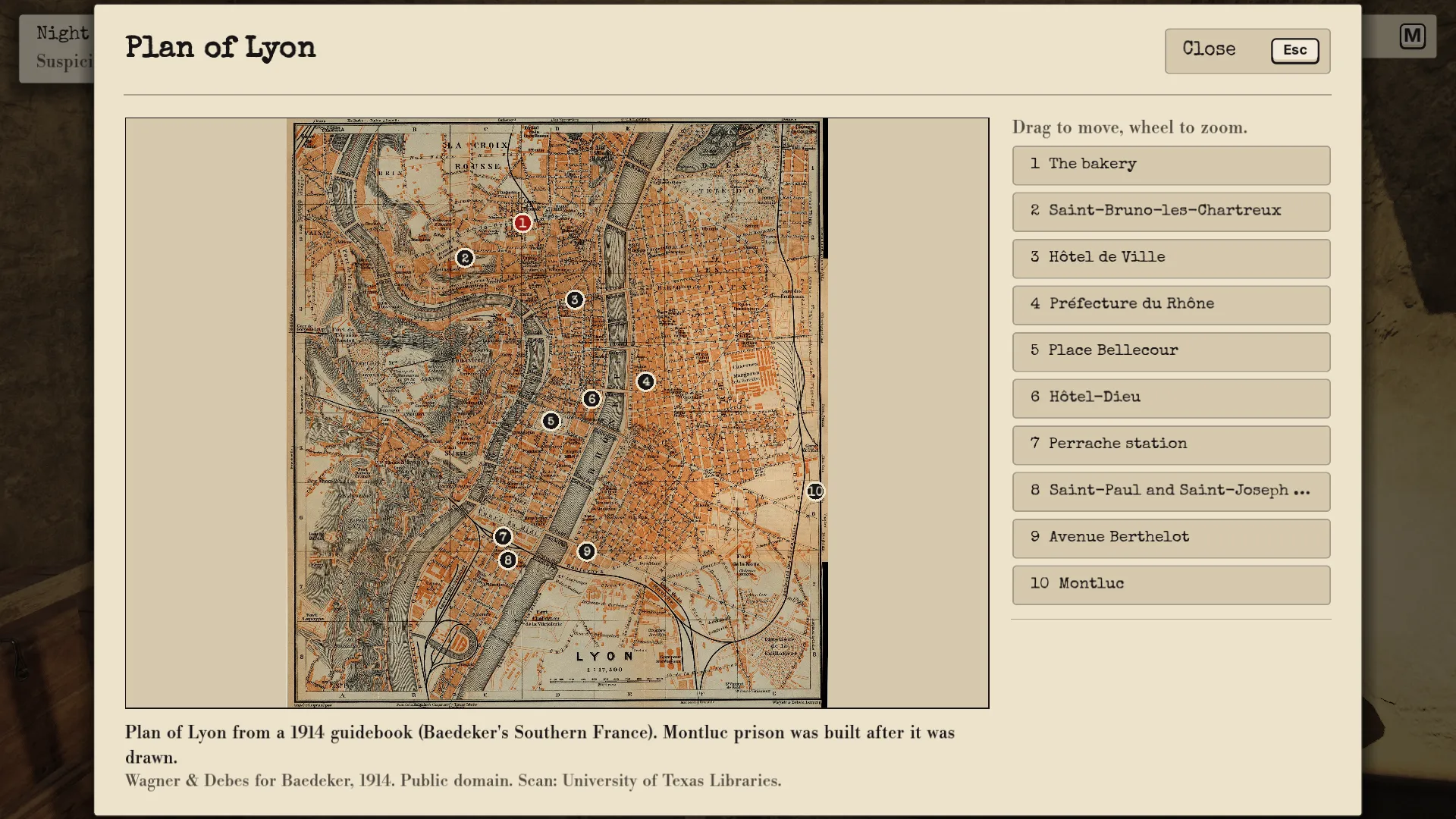
After each night, short pages tell what was really happening in Lyon and in the war on those very days, from the Gestapo on the avenue Berthelot and Montluc prison to the bombing of 26 May 1944 and the Liberation. Real events, a fictional cast: no real victim or resister is portrayed as a character. The history pages cite their sources, the family’s story is marked as fiction, and the persecution of Jews is told, never shown.
Features
- Thirty nights, from 16 November 1943 to the Liberation of Lyon on 3 September 1944, and an epilogue.
- Passwords, countersigns, knock patterns, identity cards and forgeries, the cell's ledger and a 1914 plan of Lyon.
- A family to keep alive upstairs, choices that stay made, and raids at dawn.
- Some 85 pages of sourced history between the nights.
- Real events and a fictional cast. Anything simplified for play is labelled as such.
- Full controller support and the Steam Deck; captions for sounds, larger text and a slower pace in Settings.
History
The history behind Knock Twice
Pages from the game about what really happened in Lyon in 1943 and 1944, word for word with their sources: Montluc, and Lyon's winter of 1943.
Screenshots
Accessibility
- Text and screens in three sizes: Normal, Large and Larger. On a Steam Deck the text starts at Large.
- The pace of what's said at the door and in a raid: Normal, Slower or Slowest.
- Captions for sounds, such as knocks, footsteps, sirens and engines. Knocks are shown as dots, with a gap where the knocker paused, so a pattern can be read as well as heard.
- Separate volume for everything, the music and the sounds.
- Full controller support, with button hints that follow whichever you're using.
- The night at the door can be paused at any time.
- Tips on the first nights, which can be turned off.
- A content note before a new game says what the game shows.
Not in yet
- A colour-blind or high-contrast mode
- Changing which keys or buttons do what
- Voiced lines or screen-reader support, so there's a lot of reading
- Languages other than English, for now
Need one of these, or something else? Let me know.
Questions
What can I play it on?
Windows, macOS and Linux, on Steam. It has full controller support and is made to play on the Steam Deck, where the text starts at Large.
How long is it?
Thirty nights, from 16 November 1943 to the Liberation of Lyon on 3 September 1944, then an epilogue. Between the nights are some 85 pages of history.
Is it a true story?
The events are real and the cast is fictional. No real victim or resister is portrayed as a character. The history pages cite their sources, the family's story is marked as fiction, and anything simplified for play is labelled as such.
What does it show?
The German occupation of Lyon in 1943 and 1944, and the persecution of Jews there: arrests, deportation, executions and violence. Some deaths happen at the door (a shot, a fall out of sight, some blood), without lingering. The persecution of Jews is told, never shown. Period insignia, including the swastika, appear only in their historical context. A content note opens the game.
What languages is it in?
English, in the interface and subtitles. There's no voice acting. A French translation is planned.
How much is it, and when is it out?
The price and the release date aren't announced yet.